Table Of Content
Since the design of a study can affect the validity of its results, it is important to understand the different types of study designs and their strengths and limitations. Blinding is especially important in studies where subjective response are considered as outcomes. This is because certain responses can be modified based on the knowledge of the experiment group that they are in. For example, a group allocated in the non‐intervention group may not feel better as they are not getting the treatment, or an investigator may pay more attention to the group receiving treatment, and thereby potentially affecting the final results. However, certain treatments cannot be blinded such as surgeries or if the treatment group requires an assessment of the effect of intervention such as quitting smoking. One of the aspects that is often overlooked is the selection of cases and controls.
Masala Factory
Our family-owned business has a seasoned staff with an unmatched expertise in helping builders and homeowners find house plans that match their needs and budgets. Hence, while designing a research study, both the scientific validity and ethical aspects of the study will need to be thoroughly evaluated. The dataset generated and analysed during the current study is available from the corresponding author on reasonable request. The standard Philips Lumify App version 4.0.1 software and its dedicated lung-preset was installed on the tablet and used for the examination. FLUS followed a standardised 14 scanning zone protocol using predefined questions regarding pneumothorax, pleural effusion, interstitial syndrome, and other obvious pathology [16, 17]. In forward-directed studies, the direction of enquiry moves from exposure to outcome.
Undergraduate Studies
The randomized controlled clinical trial is considered the gold standard for evaluating the efficacy of a treatment. Randomization leads to equal distribution of known and unknown confounders between treatment arms; therefore, we can be reasonably certain that any difference in outcome is a treatment effect and not due to other factors. It is possible to determine risk of the outcome in each treatment arm accurately. However, randomized controlled trials have their limitations and may not be possible in every situation.
Ecologic study
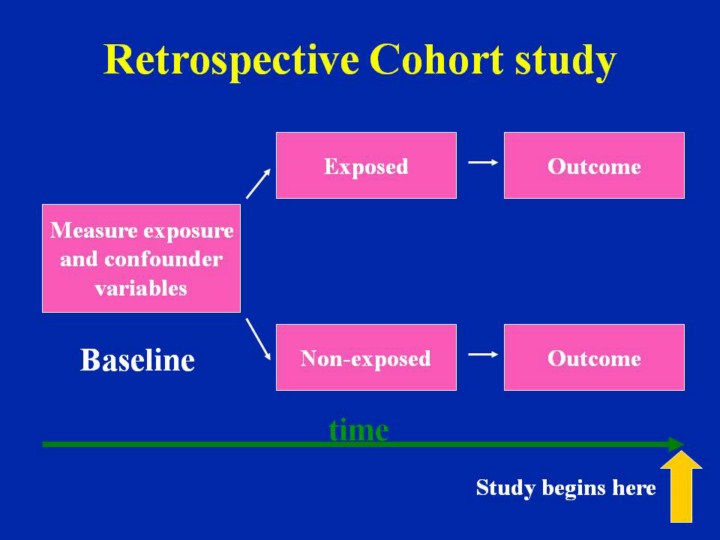
Here, the direction of enquiry begins with the exposure and then proceeds to outcome. The researcher begins with a group of individuals who are free of outcome at baseline; of these, some have the exposure (study cohort) while others do not (control group). The groups are followed up over a period of time to determine occurrence of outcome.
TERMS USED IN RESEARCH DESIGNS
The Danish ACHCSs use POCT for CRP and haemoglobin on capillary blood, but given the challenges of diagnosing older adults, a comprehensive approach is needed with additional clinical assessment, biochemical results, and imaging modalities [6]. By introducing extended POCT (ExtPOCT) during in-home assessment, we hypothesize that ExtPOCT improves diagnostic work-up and supports the primary care physicians’ clinical decision-making. In prospective studies, the outcome has not occurred at the time of initiation of the study. The researcher determines exposure and follows participants into the future to assess outcomes.

Advantages
Additional analyses using the risk ratio compared the risk between participants exposed (smoker) and unexposed (nonsmoker) to provide further information about the data. The risk ratio illustrates the relative increase or decrease in the incidence between the exposed and unexposed groups (Alexander, 2015). A primary strength of the prospective cohort design is that it allows investigators to determine the number of new cases (incidence) occurring over time. From our example, the incidence of new-onset heart disease and stroke among the study participants. The cohort study design is an excellent method to understand an outcome or the natural history of a disease or condition in an identified study population (Mann, 2012; Song & Chung, 2010).
Longitudinal vs Transversal Studies
In this article, we will look at the important features of various types of research study designs used commonly in biomedical research. Cohort studies are observational, so researchers will follow the subjects without manipulating any variables or interfering with their environment. Research study design is a framework, or the set of methods and procedures used to collect and analyze data on variables specified in a particular research problem. The study concluded that the association between fame and mortality is mainly conditioned to performers’ characteristics. Adverse experiences in their lives predisposed them to adopt health-damaging behaviours, and fame and wealth provide greater opportunities to engage in risk-taking. Young people wish to emulate their idols, so it is important they recognise that drug abuse and risk-taking may be rooted in negative experiences rather than seeing them related to success.
These do not try to answer questions or establish relationships between variables. Examples of descriptive studies include case reports, case series, and cross-sectional surveys (please note that cross-sectional surveys may be analytical studies as well – this will be discussed in the next article in this series). Examples of descriptive studies include a survey of dietary habits among pregnant women or a case series of patients with an unusual reaction to a drug. Research study designs are of many types, each with its advantages and limitations. The type of study design used to answer a particular research question is determined by the nature of question, the goal of research, and the availability of resources.
This article describes the most common types of designs conducted by researchers. The points raised for each dimension are intended as a starting point to inspire discussion, rather than a set recipe for evaluation. There are many ways to use prospective design, but one of the most common is to create scenarios. Scenario planning involves developing several different possible future scenarios and then exploring how they might play out. Blood-samples were collected by venipuncture and analysed immediately during in-home assessment. Overall, in-home assessments with extended point-of-care testing are feasible and may aid to identify and handle acute diseases in older adults.
Therefore, these are hypothesis testing studies and can provide the most convincing demonstration of evidence for causality. As a result, the design of the study requires meticulous planning and resources to provide an accurate result. Here, the direction of enquiry begins with the outcome and then proceeds to exposure. Case–control studies are always retrospective, i.e., the outcome of interest has occurred when the study begins.
Our project managers, product owners, designers, developers, and researchers are all working hard to get the job done, but this focus on the here and now leaves little room for thinking strategically or planning ahead. With determination and commitment, I am confident that we can succeed in meeting both of these goals. The future is always unclear, and so many factors can impact a product or service.
To him/her, the process of enrolling cases and controls over a period of several months appears prospective. Or, at the very least, one must be clear that the terms relate to work flow for each individual study participant, and not to the study as a whole. Analytical studies attempt to test a hypothesis and establish causal relationships between variables.
Prospective students explore RIT art and design programs at National Portfolio Day event RIT - Rochester Institute of Technology
Prospective students explore RIT art and design programs at National Portfolio Day event RIT.
Posted: Mon, 06 Nov 2023 08:00:00 GMT [source]
Thus, clinical trials can be used to evaluate new therapies, such as new drug or new indication, new drug combination, new surgical procedure or device, new dosing schedule or mode of administration, or a new prevention therapy. The experimental study design can be classified into 2 groups, that is, controlled (with comparison) and uncontrolled (without comparison).1 In the group without controls, the outcome is directly attributed to the treatment received in one group. This fails to prove if the outcome was truly due to the intervention implemented or due to chance.
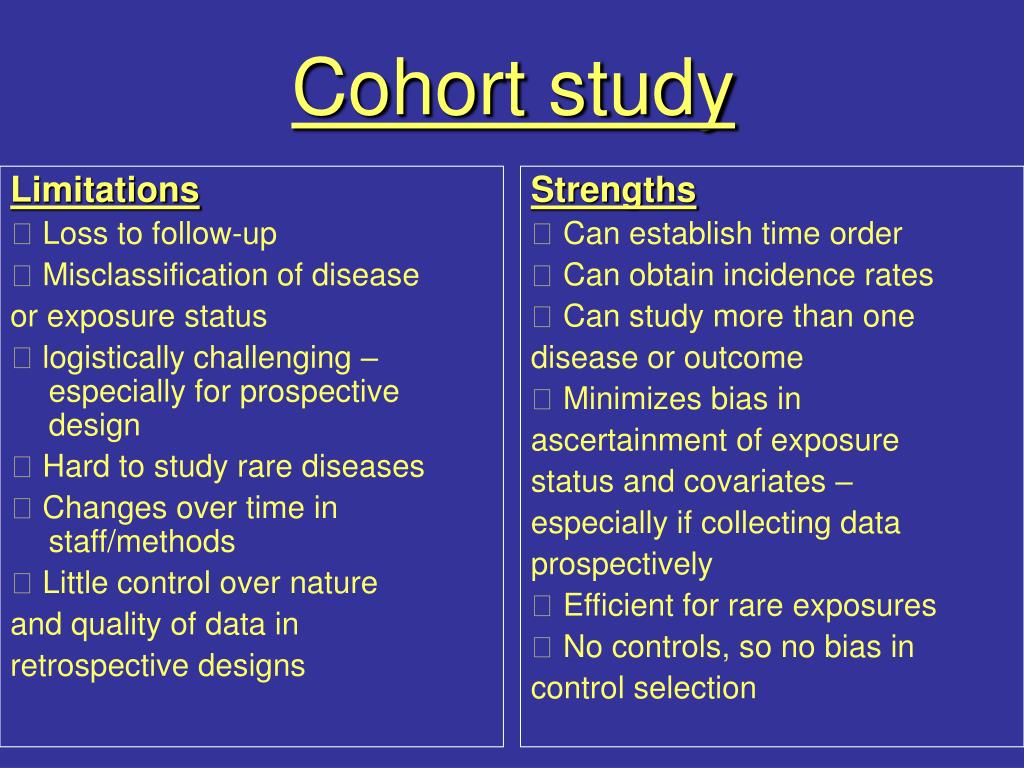
Therefore, including chest pain as a criterion in our study was deemed potentially confounding, and it was decided to exclude chest pain as a specific inclusion criterion for our study. We also omitted nasopharyngeal swab for PCR for upper respiratory pathogens and urine flow-cytometry from the intervention as explained in the following sections. The researcher merely observes outcomes in different groups of participants who, for natural reasons, have or have not been exposed to a particular risk factor.
We would also like to thank the Acute Community Healthcare Service in Kolding Municipality (Acute Team Kolding) and all Acute Community Nurses for their cooperation in the study. Peter Barkholdt and Anne-Mette Rottwitt contributed with their assistance to the implementation of the study and dedicated engagement in the Advisory Board. We would also like to thank all the primary care physicians in Kolding Municipality for their collaboration.


No comments:
Post a Comment